
Ways Ductless Mini Splits Improve Energy Efficiency in Homes
Key Points
- Six reasons ductless mini splits outperform traditional HVAC systems on energy efficiency: no duct losses, heat pump technology, zoned heating and cooling, variable speed compressor, inverter technology, and smart thermostat integration.
- According to the U.S. Department of Energy, ductless mini split systems can reduce heating and cooling energy costs by up to 30% compared to traditional systems — primarily by eliminating duct losses that account for more than 30% of conditioned air in forced-air systems.
- Heat pump technology is the most important efficiency advantage — instead of generating heat through combustion or resistance heating, mini splits move existing heat from one place to another, consuming only the electricity needed for the transfer rather than the full energy equivalent of the heat produced.
- In Littleton and Jefferson County, where Xcel Energy serves most residents, the combination of Colorado’s long heating season (October through April) and significant summer cooling demand makes the SEER and HSPF ratings of a new mini split system directly impactful on monthly bills.
- Variable speed compressors eliminate the energy waste of on/off short cycling — the same wear-and-tear pattern that shortens compressor lifespan — while also improving dehumidification, a meaningful benefit during Colorado’s monsoon season in July and August.
- Smart thermostat integration with geofencing and weather forecast data allows Littleton homeowners to automate energy savings without sacrificing comfort — the system adjusts before you need it rather than after.
- Contact Simply Mechanical, AC, Furnace & Boiler Repair for expert mini split installation and service throughout Littleton and Jefferson County, CO.
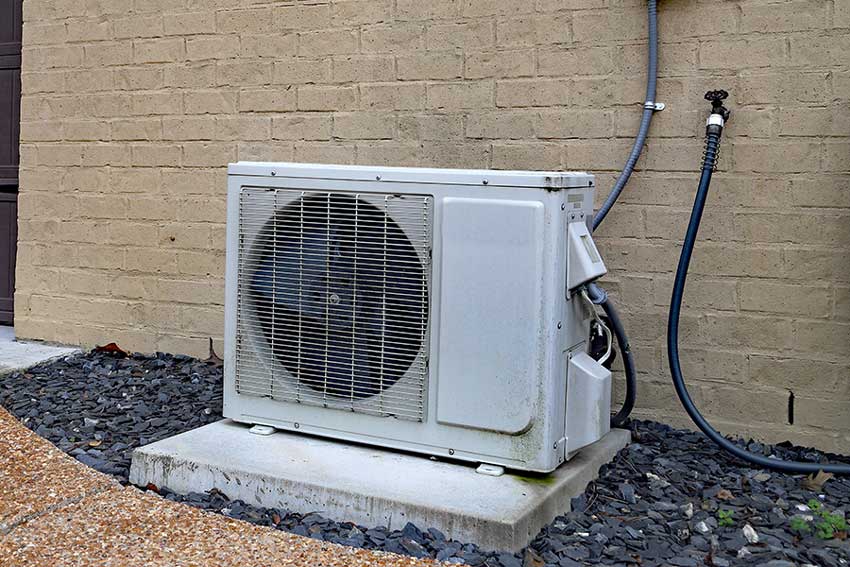
Ductless mini splits have earned their reputation due to their various advantages over regular HVAC systems. Mini split systems have an outdoor unit connected to the indoor units with a small conduit — no ductwork required. This makes installing them easier than central air conditioners, and they work equally well in renovated or older buildings. One advantage that makes mini splits stand out is their energy efficiency. But what makes them more efficient than other HVAC systems?
No Ducts — No Energy Losses
Regular HVAC systems rely on ducts to move conditioned air to the rooms. More than 30% of the total heat is lost through ductwork — pinholes and cracks allow heated or cooled air to leak out. The losses are even higher when ductwork runs through unconditioned spaces like the attic. Ductless mini splits eliminate these losses entirely, delivering conditioned air directly into the room and making them more efficient than even high-efficiency forced-air systems.
What 30% duct loss means in real dollars for Littleton homeowners: A home spending $200 per month on heating and cooling through a forced-air system with typical duct leakage is effectively wasting $60 of that every month — $720 annually — on conditioned air that never reaches the living space. In Jefferson County’s older housing stock, where ductwork may be 20–30 years old with accumulated seam separations and disconnected joints in attic and crawl space runs, actual duct losses often exceed the 30% average. A ductless mini split installation eliminates this waste permanently — the efficiency gain is structural, not dependent on behavior change or thermostat programming.
Heat Pump Technology
Heat pumps transfer heat from one area to another rather than generating it through combustion or resistance heating. This reversed technology works in both directions — for cooling and heating. Mini splits mostly use air-source heat pumps: in heating mode, the system extracts heat from ambient outdoor air and pumps it indoors; in cooling mode, the process reverses. Since the system moves heat rather than creating it, it reduces reliance on energy sources significantly. The only electrical power required is for the heat transfer itself — not for producing the full energy equivalent of the heat delivered.
Why heat pump efficiency is especially relevant in Littleton’s climate: Colorado’s Front Range experiences cold winters, but temperatures in Littleton and the Jefferson County foothills rarely drop below 0°F for sustained periods — and modern cold-climate heat pumps operate efficiently down to -13°F or below. This means a mini split heat pump can provide efficient heating throughout the vast majority of Littleton’s winter without resistance backup heating. Compared to electric resistance baseboard heating (which converts electricity to heat at roughly 1:1 efficiency) or a gas furnace, a heat pump can deliver 2–4 units of heat energy for every 1 unit of electrical energy consumed — a fundamental thermodynamic efficiency advantage. For Littleton homeowners considering heat pump installation, this efficiency ratio is the core financial case.
Zoned Heating and Cooling
Zoning divides the building into different areas (zones), each conditioned independently. Traditional systems condition the whole building as one unit. Ductless mini splits focus on specific zones — occupied spaces receive conditioned air, while empty rooms remain at energy-conserving temperatures. Occupants can also set temperatures to their individual preference, preventing overheating or overcooling and resulting in meaningful energy conservation.
Zoning in practice for Littleton and Jefferson County homes: A typical Jefferson County home with a home office, guest rooms, and living areas used at different times throughout the day can see significant energy savings from zoned operation. During working hours, the home office zone maintains comfort while guest rooms stay at a setback temperature. In the evening, the living areas and bedrooms are conditioned while the office setback resumes. This is simply not achievable with a single-thermostat central HVAC system without significant additional investment in dampers and zone controllers. For homes with sunrooms, finished basements, or workshop spaces that have historically been difficult to condition efficiently, a ductless mini split provides targeted comfort without conditioning the entire home.
Variable Speed Compressor
The compressor pressurizes and circulates the refrigerant. Regular HVAC systems have fixed-speed compressors that operate at a constant speed regardless of heating or cooling demand. Variable speed compressors adjust their speed based on actual temperature needs — when demand is low, the compressor runs slower and consumes less energy, eliminating the frequent short cycling that contributes to energy inefficiency.
Additionally, when working at low speeds, variable speed compressors significantly improve the system’s dehumidification capability. They can run for extended periods at low speed — removing excess moisture from the air while maintaining acceptable temperatures. This often eliminates the need for a separate humidifier.
Variable speed compressors and Colorado’s monsoon season: July and August bring Colorado’s monsoon pattern — periods of elevated humidity that feel noticeably uncomfortable even at moderate temperatures. A fixed-speed compressor that short-cycles may cool the air temperature quickly without adequately removing moisture, leaving rooms feeling sticky despite reaching the set temperature. A variable speed compressor running extended low-speed cycles removes significantly more moisture per cooling cycle. For Littleton homeowners who have noticed their home feels humid in late summer even when the AC is running, upgrading to a mini split with a variable speed compressor can resolve the comfort issue without adding a separate dehumidifier. Schedule a ductless mini split repair or consultation if your current system is struggling with humidity control.
Inverter Technology
Mini split systems are designed with inverter technology — sensors that continually monitor temperature and adjust the compressor’s speed in real time. This allows the system to heat or cool a room rapidly when needed, then modulate down to a low-power maintenance mode rather than cycling off completely. The result is reduced energy consumption compared to systems that operate at full power then shut off entirely.
Inverter technology vs. traditional on/off cycling — the efficiency gap in real terms: A traditional fixed-speed compressor uses the most electricity at startup — the inrush current to overcome the motor’s initial resistance. Every time the system short-cycles (runs briefly, shuts off, restarts), it incurs this startup energy cost repeatedly. An inverter-driven compressor avoids most startup events by modulating speed continuously rather than switching off. In Littleton’s shoulder seasons (March–May and September–October), when outdoor temperatures fluctuate significantly throughout the day, inverter technology allows the system to follow the demand curve smoothly — running at 30–40% capacity on a mild afternoon and ramping up to 80–90% when needed — without the energy waste of repeated full-power cycling.
Smart Thermostat Integration
Mini split systems are equipped with smart thermostats that enable homeowners to control their systems remotely — via mobile apps or web interfaces. Homeowners can adjust temperature settings, monitor energy usage, and change the system’s operation from anywhere. This real-time adjustment based on occupancy and weather conditions helps reduce energy consumption without sacrificing comfort.
Homeowners can create custom schedules for different zones based on daily routines. Smart thermostats can also detect room occupancy using geofencing technology — if no occupants are detected, the system automatically adjusts to an energy-saving mode. Some thermostats integrate with weather forecast data to precool or preheat before peak temperature periods, reducing the workload during the hottest or coldest parts of the day.
Smart thermostat integration with Xcel Energy demand management: Xcel Energy offers time-of-use rate programs for residential customers in the Denver metro area, including Jefferson County. Under these programs, electricity costs more during peak demand hours (typically late afternoon and evening in summer). A smart thermostat integrated with a mini split can precool the home during off-peak morning hours — storing “coolth” in the thermal mass of the building — and then reduce system output during the expensive peak window. This demand-shifting capability is only practical with a smart, remotely programmable system. Littleton homeowners on time-of-use Xcel rates who install a mini split with smart thermostat integration can benefit from both the system’s inherent efficiency and the rate optimization.
Key Takeaways
Ductless mini splits improve energy efficiency through six compounding advantages: eliminating the 30%+ duct losses that burden all forced-air systems, using heat pump technology to deliver 2–4 units of heat per unit of electricity consumed, conditioning only occupied zones rather than the entire home, using variable speed compressors that modulate demand and improve dehumidification, applying inverter technology to avoid the energy waste of repeated startup cycling, and integrating with smart thermostats for occupancy-based and weather-predictive energy management. In Littleton and Jefferson County — with long heating seasons, significant summer cooling demand, monsoon-season humidity in July–August, and Xcel Energy’s time-of-use rate options — each of these efficiency advantages delivers real, measurable savings. Simply Mechanical, AC, Furnace & Boiler Repair is Littleton’s authorized American Standard dealer, specializing in mini split installation, repair, and maintenance throughout Jefferson County.
Contact Simply Mechanical for Ductless Mini Split Installation in Littleton, CO
Mini split systems have a high seasonal energy efficiency ratio — providing more heating or cooling output for each unit of electrical energy consumed. If your current HVAC system is aging, consider installing ductless mini splits to save on energy bills and improve comfort.
At Simply Mechanical, AC, Furnace & Boiler Repair, we are committed to providing heating and cooling services in Littleton, CO. We are specialists in system repair, maintenance, and new installation services. Our company is an authorized American Standard Dealer, servicing different HVAC models and makes. Contact Simply Mechanical, AC, Furnace & Boiler Repair today and get services tailored to your needs.